Resource Hub
Authentication & User Management Resources
Understand and implement login, sessions, and access control that is both usable and secure.
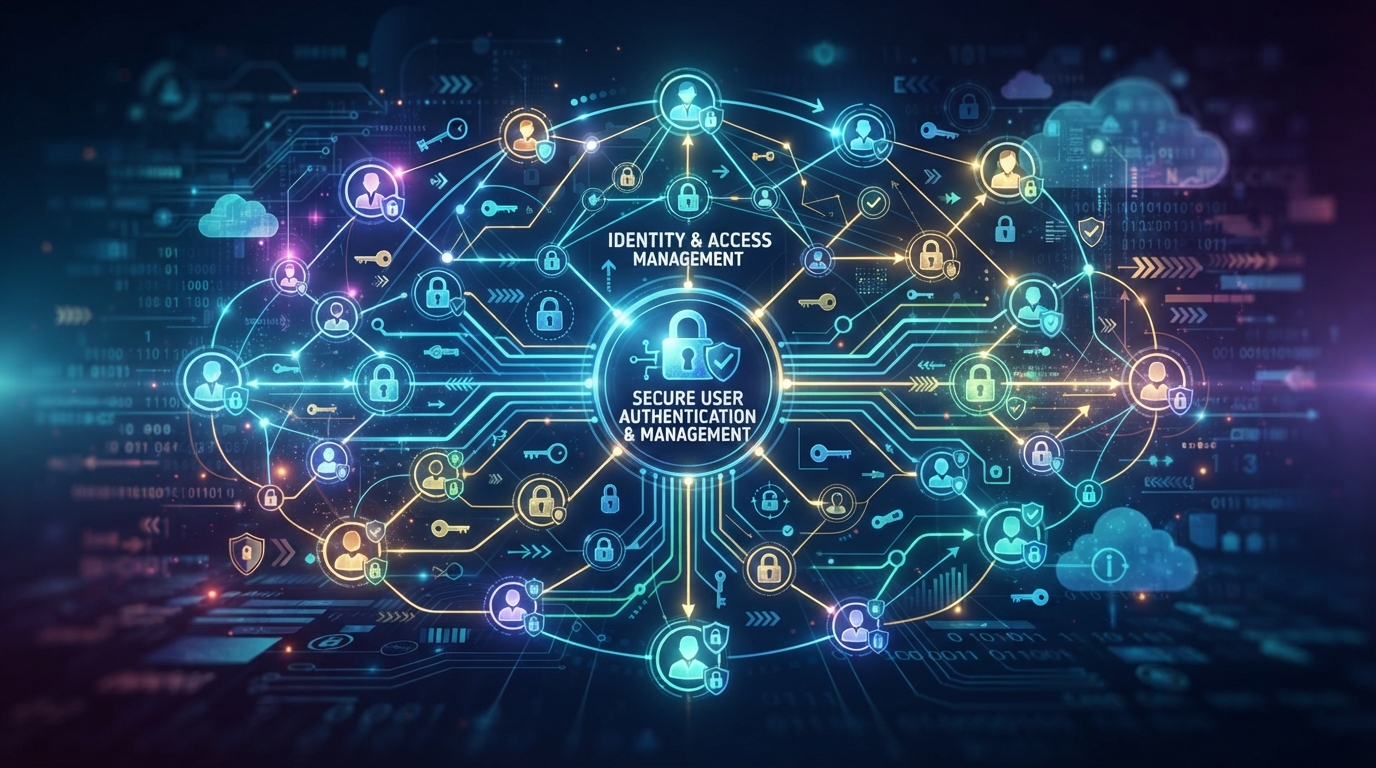
Navigating the landscape of authentication and user management is crucial to ensuring the security and usability of your web applications. As you build or refine these systems, understanding key protocols and best practices can greatly enhance the overall integrity and user experience of your app.
This resource hub delves into the essentials of authentication protocols, secure login flows, session management, and more. Whether you are new to these concepts or looking to optimize existing systems, the following sections offer actionable insights to aid your efforts.
By arming yourself with knowledge on these topics, you can create robust access control mechanisms and secure user data, safeguarding your users and the integrity of your platform.
Understanding Authentication Protocols
Authentication protocols like OAuth, OpenID Connect, and SAML play pivotal roles in verifying user identities and granting access to systems. OAuth is widely used to allow users to grant applications access to their information without revealing their passwords, which is particularly useful in social media and third-party integrations. OpenID Connect builds on OAuth, adding an identity layer to manage user authentication in a more standardized way. SAML, on the other hand, is often utilized in enterprise environments for single sign-on capabilities, transferring authentication data between parties efficiently.
Understanding these protocols is essential for implementing secure and efficient user authentication systems. They each offer unique advantages and can be selected based on specific application needs.
- OAuth: Allows access delegation without password sharing.
- OpenID Connect: Adds identity verification to OAuth framework.
- SAML: Facilitates enterprise-level single sign-on.
Designing Secure Login Flows
Creating a secure login flow is about balancing security with user convenience. Implementing multi-factor authentication (MFA) can significantly enhance security by requiring an additional verification step, such as a code sent to a user's phone. Single sign-on (SSO) is another technique that simplifies user access to multiple applications with a single set of credentials, enhancing both security and user experience.
A seamless login process minimizes friction, encouraging users to maintain strong security practices without sacrificing ease of access.
- Implement multi-factor authentication for added security.
- Utilize single sign-on to streamline user access.
- Design intuitive interfaces to lower barrier of entry.
- Ensure secure password handling and storage.
Session Management Best Practices
Effective session management is crucial for maintaining security after a user has logged in. Tokens, often used for session management, should be handled with care, ensuring they are stored securely and transmitted over encrypted channels. Implementing token expiration strategies can further secure sessions, automatically logging users out after a period of inactivity.
By adhering to these best practices, you can mitigate risks such as session hijacking and unauthorized access.
- Use tokens for secure session management.
- Implement secure token storage methods.
- Encrypt tokens during transmission.
- Use token expiration to enhance security.
Access Control Strategies
Access control is about granting the right users the right level of access. Role-based access control (RBAC) assigns permissions based on user roles, making it easier to manage permissions across an organization. Attribute-based access control (ABAC) takes this further by considering user attributes, actions, and environmental conditions, providing a more granular level of access management.
Choosing the right strategy depends on your organization's needs and the complexity of the access requirements.
Securing User Data Beyond Authentication
Authentication is just the first step in protecting user data. Employing data encryption techniques ensures that sensitive information remains private, even if intercepted. Secure data storage practices, such as using encrypted databases or cloud storage solutions, further safeguard data from unauthorized access.
By going beyond authentication, you can provide a comprehensive security framework that protects user data throughout its lifecycle.
Related services
- Authentication & User Login SolutionsLogins that fail, sessions that drop, and auth that is quietly insecure. We repair and harden the authentication in your AI-built app.
- Database & Backend Recovery ServicesCorrupted data, failing queries, migrations that won't run: we recover and stabilize the database and backend behind your AI-built app.
Common problems
- Repair Supabase Authentication ProblemsUsers cannot sign in, sessions drop, or your data is unexpectedly exposed. We fix Supabase auth and security.
- Cursor Built My App but It Doesn't WorkCursor got you 80% of the way and then everything started breaking. We debug and finish Cursor-built apps.
- Fix a Broken AI-Generated WebsiteBroken layouts, dead links, blank pages, or a site Google refuses to show. We repair AI-generated websites and make them launch-ready.
Blog categories
More resources
Want us to handle it for you?
Reading is useful, but if you would rather have experts fix it, we are one message away.