Core Web Vitals for AI-Generated Sites
Core Web Vitals affect both rankings and conversions. Here is what they measure and how to improve each one.
· BuildRescue Engineering
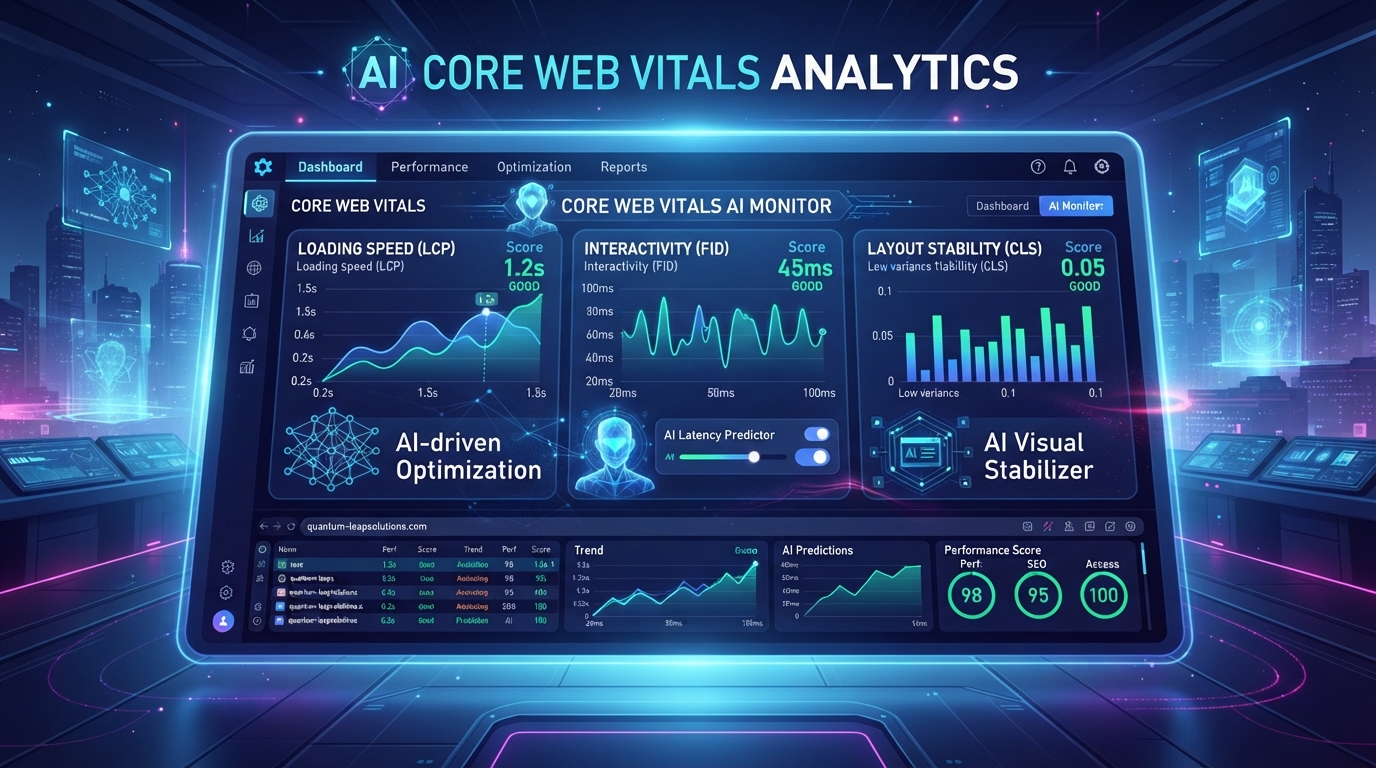
Understanding Core Web Vitals: The Essentials
Core Web Vitals are a set of metrics introduced by Google to measure the performance and user experience of websites. For AI-generated sites, these metrics are crucial because they directly impact SEO rankings and user engagement. The three primary metrics are Largest Contentful Paint (LCP), Interaction to Next Paint (INP), and Cumulative Layout Shift (CLS).
LCP measures loading performance, INP evaluates interactivity, and CLS assesses visual stability. Ensuring these metrics are optimized is vital for AI sites, which often handle dynamic content and complex scripts.
AI-Specific Challenges with Core Web Vitals
AI-generated sites often face distinct challenges in optimizing Core Web Vitals due to their reliance on heavy scripts and dynamic content. These elements can lead to slower load times and increased layout shifts, negatively affecting LCP and CLS scores. Additionally, AI-driven interactivity can be sluggish, impacting INP as users experience delays with each interaction.
Addressing these issues requires understanding the unique demands AI sites place on performance metrics.
- Heavy AI scripts slow down LCP.
- Dynamic content causes layout shifts, affecting CLS.
- Complex interactions delay INP performance.
- Server response times impact overall site speed.
- Resource-heavy AI models can strain browser resources.
Optimizing LCP, INP, and CLS for AI Sites
To enhance Core Web Vitals for AI-generated sites, targeted optimization strategies are essential. For LCP, reducing server response times and optimizing images can lead to significant improvements. To improve INP, consider reducing JavaScript execution time and enhancing server request handling.
For CLS, ensuring elements have specified sizes and avoiding content that shifts unexpectedly can greatly enhance visual stability. These steps help AI sites achieve smoother performance and user experiences.
- Use a Content Delivery Network (CDN) to speed up LCP.
- Lazy-load offscreen images to improve initial load.
- Minimize JavaScript to boost INP responsiveness.
- Define sizes for media elements to stabilize CLS.
- Optimize fonts and styles for faster rendering.
Tools and Techniques: Monitoring and Testing
Monitoring and testing Core Web Vitals regularly is crucial for maintaining AI site performance. Tools like Google PageSpeed Insights and Lighthouse offer valuable insights into these metrics, helping identify areas needing improvement. Additionally, continuously testing your site's performance in real user conditions ensures that changes are effective and sustainable over time.
Leveraging these tools helps you keep track of performance and make informed decisions for ongoing optimization.
- Google PageSpeed Insights for detailed analysis.
- Lighthouse audits for comprehensive performance testing.
- Utilize WebPageTest for real-user monitoring.
- Set up performance budgets to guide development.
- Employ automated testing for consistent tracking.
Frequently asked questions
How do Core Web Vitals affect SEO?
- Core Web Vitals are part of Google's ranking criteria, affecting how sites appear in search results. Optimized Core Web Vitals improve site visibility, leading to better traffic and user engagement.
What tools can help improve LCP on AI sites?
- Tools like Google PageSpeed Insights, Lighthouse, and WebPageTest provide actionable insights to enhance LCP by identifying bottlenecks such as slow server response times and unoptimized images.
Why do AI-generated sites struggle with CLS?
- AI-generated sites often incorporate dynamic content and heavy scripts, leading to unexpected shifts in layout. This instability can significantly impact CLS, as elements reposition themselves during loading.
Can AI tools help in optimizing site performance?
- Yes, AI tools can be employed to analyze patterns and automate performance optimizations, such as image compression and predictive loading, enhancing overall site speed and stability.
How often should Core Web Vitals be monitored?
- Core Web Vitals should be monitored regularly, especially after significant site updates or changes, to ensure that performance remains optimal and no new issues arise.